托福分数测试HOT
托福课程优惠HOT
托福正价课试听0元
新托福机考练习NEW
0元讲座HOT
新版托福入门课程HOT
托福入门导学NEW
4000人报
托福机经
PDF版
TPO练习
官方授权
资料下载
826套
专业测评
40118人已测
高分经验
1193帖

扫码免费领资料
托福全科备考资料
免费水平测试及规划

扫码关注掌握一手留学资讯
回复XDF免费水平测试
There is also a certain apprehension. Sigmar Gabriel, the vice-chancellor and economics minister, said on September 21st that he hoped the export brand of Germany as a whole would not be tarnished. Germany’s economic strength rests in large part on the idea that anything stamped “Made in Germany” will offer a high level of reliability, trustworthiness and engineering prowess. Much of that reputation rests on the broad shoulders and sturdy tyres of the car industry, which directly or indirectly employs one in seven of the country’s workers; and with a stable of marques that includes Porsche and Audi, VW is that industry’s leader. Industrialists fret that consumers worldwide could exact reputational Sippenhaft—collective punishment, but literally “kin liability”—on all German engineering.
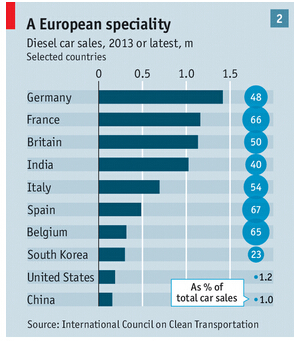
As well as being a threat to Germany’s export earnings, the scandal also menaces the brainchild of one of its most eminent engineers, Rudolf Diesel—at least as far as its future in cars is concerned. Diesel engines use fuel more efficiently than engines with spark plugs, and better efficiency reduces both drivers’ expenses and carbon-dioxide emissions. Those advantages have endeared diesel engines to thrifty Europeans with green governments; none too popular elsewhere in the world, they power half of Europe’s cars (see chart 2).
Unfortunately, the benefits come with costs. Diesel cars’ alt="托福阅读材料:大众丑闻A mucky business" efficiency comes from burning their fuel at a higher temperature, and that means they turn more of the nitrogen in the air they use for burning into various oxides of nitrogen, collectively known as NOx. This does not have global climate effects on the same scale as those of carbon dioxide, which is the most important long-lived greenhouse gas. But it has far worse local effects, generating smogs and damaging plants and lungs. To make matters worse, the catalytic technologies used to deal with the NOx emitted by petrol engines are not well suited for use with diesels, requiring engine makers to deploy more complex and expensive alternatives. That is not a big problem for large engines like those of trucks and ships. But it is for small engines like those of cars.
In America NOx standards are more demanding than they are in Europe. Mazda and Honda, both accomplished producers of diesel engines, have had trouble complying with them. It now appears that VW, which has put a lot of effort into persuading Americans that diesels can be clean and green, would also have failed to comply if it had not cheated. The campaign to convince Americans of the merits of diesel may thus well be at an end. And if it turns out that under real-life conditions many diesels also break Europe’s less stringent NOx standards then the future of diesel cars worldwide will be bleak.
 资料下载
资料下载
2021-2025托福机经试题|答案|范文下载
发布时间:2024-02-21关注新东方在线托福
回复【XDF】获取
托福全科备考资料大礼包
发布时间:2024-02-21关注新东方在线托福
回复【XDF】获取
托福正价课试听课程包
发布时间:2024-02-21关注新东方在线托福
回复【XDF】获取
托福定制备考规划
发布时间:2024-02-21关注新东方在线托福
回复【XDF】获取
托福TPO免费模考
发布时间:2024-02-21关注新东方在线托福
回复【XDF】获取
托福免费水平测试
发布时间:2024-02-21关注新东方在线托福
回复【XDF】获取
托福写作新题型模拟题+范文汇总[ETS发布]
发布时间:2023-07-30关注新东方在线托福
回复【XDF】获取
2023全年托福机经PDF版下载
发布时间:2023-06-17关注新东方在线托福
回复【XDF】获取
2022全年托福机经PDF版下载
发布时间:2023-06-17关注新东方在线托福
回复【XDF】获取
2022全年写作托福机经整理
发布时间:2023-01-13关注新东方在线托福
回复【XDF】获取
2022年托福考后题目回忆
发布时间:2023-01-13关注新东方在线托福
回复【XDF】获取
托福口语黄金80题附录音
发布时间:2023-01-13关注新东方在线托福
回复【XDF】获取
新东方IBT写作网络课堂录音[.rar]
发布时间:2023-01-13关注新东方在线托福
回复【XDF】获取
21天托福听力提升计划
发布时间:2023-01-13关注新东方在线托福
回复【XDF】获取
不怕跑题偏题,这份写作资料请收好
发布时间:2023-01-13关注新东方在线托福
回复【XDF】获取
托福阅读提分技巧锦囊妙计
发布时间:2023-01-13关注新东方在线托福
回复【XDF】获取
口语拖后腿?因为你缺少这套万能句式资料
发布时间:2019-11-01关注新东方在线托福
回复【XDF】获取
攻破托福听力难关的资料包
发布时间:2023-01-13关注新东方在线托福
回复【XDF】获取
看剧学英语,经典美剧一键获取
发布时间:2019-11-01关注新东方在线托福
回复【XDF】获取
原版外刊资源合集|精心打包整理
发布时间:2019-11-01关注新东方在线托福
回复【XDF】获取

关注新东方在线托福,
回复【XDF】获取大礼包

 推荐阅读
推荐阅读
托福考试网整理了2024托福考试时间、托福考试内容、托福写作新题型样题+范文、托福考题等内容,今天带来的是ETS官方托福阅读模拟题【2】,希望对同学们托福考试有所帮助!
托福考试网整理了2024托福考试时间、托福考试内容、托福写作新题型样题+范文、托福考题等内容,今天带来的是ETS官方托福阅读模拟题【1】,希望对同学们托福考试有所帮助!
托福考试网为大家整理了2024年托福阅读评分标准、托福阅读考试时间、托福阅读备考攻略等内容,今天给大家带来的是2024年1月托福考试考前刷题:阅读题(4),供大家参考!
托福考试网为大家整理了2024年托福阅读评分标准、托福阅读考试时间、托福阅读备考攻略等内容,今天给大家带来的是2024年1月托福考试考前刷题:阅读题(3),供大家参考!
托福考试网为大家整理了2024年托福阅读评分标准、托福阅读考试时间、托福阅读备考攻略等内容,今天给大家带来的是2024年1月托福考试考前刷题:阅读题(2),供大家参考!

资料下载
关注新东方在线托福
回复【XDF】获取
关注新东方在线托福
回复【XDF】获取
关注新东方在线托福
回复【XDF】获取
关注新东方在线托福
回复【XDF】获取
关注新东方在线托福
回复【XDF】获取
关注新东方在线托福
回复【XDF】获取
关注新东方在线托福
回复【XDF】获取
关注新东方在线托福
回复【XDF】获取
关注新东方在线托福
回复【XDF】获取
关注新东方在线托福
回复【XDF】获取
关注新东方在线托福
回复【XDF】获取
关注新东方在线托福
回复【XDF】获取
关注新东方在线托福
回复【XDF】获取
关注新东方在线托福
回复【XDF】获取
关注新东方在线托福
回复【XDF】获取
关注新东方在线托福
回复【XDF】获取
关注新东方在线托福
回复【XDF】获取
关注新东方在线托福
回复【XDF】获取
关注新东方在线托福
回复【XDF】获取
关注新东方在线托福
回复【XDF】获取
 阅读排行榜
阅读排行榜
 相关内容
相关内容

 托福公益讲座
 托福考试练习相关
 网友热搜
网友热搜